Dorset Double, Day 2: St Aldhelm's Head and Dancing Ledge
42 people attending
18 places left
Introduction:
Last year it was an 'All-New Dorset Double' based in Lyme Regis, but this year it's back to the classic one based in Purbeck. As usual, there are two walks over a bank holiday weekend, and you can do either or both, but you have to organise your own accommodation. Campsites, hotels and B&Bs are plentiful, although they will be booking up fast. The 'Double' walks normally take place in the second May Bank Holiday weekend, but I will be away then, and by doing it on the first weekend you can go to Big Spring Camp on the second. Despite the weather being slightly cooler at the start of May, I hope you can come and experience the best of the Jurassic Coast Unesco World Heritage Site - some of the finest coastal scenery in the country (nay the world) - and just two hours from London.
Schedule:
- Day 1 (Saturday 2 May): Corfe Castle to Kimmeridge, Kimmeridge Ledges, Chapman's Pool and Kingston - circular walk (or linear with bus back)
- Day 2 (Sunday 3 May): Corfe Castle to Kingston, St Aldhelm's Head, Winspit, Dancing Ledge and Swanage - linear walk with bus back
Day 2: Corfe Castle to St Aldhelm's Head, Winspit, Dancing Ledge and Swanage
Our survey of the spectacular scenery of the Jurassic Coast continues with a linear walk where the gentle heaths of Corfe Common give way to the immense limestone cliffs of Purbeck, culminating in the breathtaking prominence of St Aldhelm's Head. It also takes in the scarred and eerie landscape of Winspit Quarries, the remarkable quasi-natural stage of Dancing Ledge and the Victorian earnestness of Durlston Country Park. After a journey through geological deep time, industrial recent time, and science-fictional space-time, we'll end up in Swanage, where cafés, ice cream parlours and amusement arcades will evoke family holidays before the bus gets you quickly back to Corfe Castle.
The sights:
Corfe Castle: Built by William the Conqueror and one of the first castles to be built with stone. Updated in the C12 and C13. Sold by Elizabeth I in 1572 to Sir Christopher Hatton, and then in 1635 to Sir John Bankes whose wife, Lady Mary Bankes, led the defence of the castle when it was twice besieged by Parliamentarian forces. The first siege, in 1643, was unsuccessful, but the second, in 1645, succeeded. In March that year the castle was slighted on Parliament's orders. A Grade I-listed building and Scheduled Ancient Monument.
Kingston: Set on high ground with wide views toward Corfe Castle and Poole Harbour. The name is from 'king’s farm', reflecting Saxon royal ownership before later monastic control. The colossal Church of St James, built in 1873 by noted architect George Edmund Street, dominates the village. It was funded by Lord Eldon as a private chapel and became the parish church in 1922 when the former parish church (now a private residence) became too dilapidated.
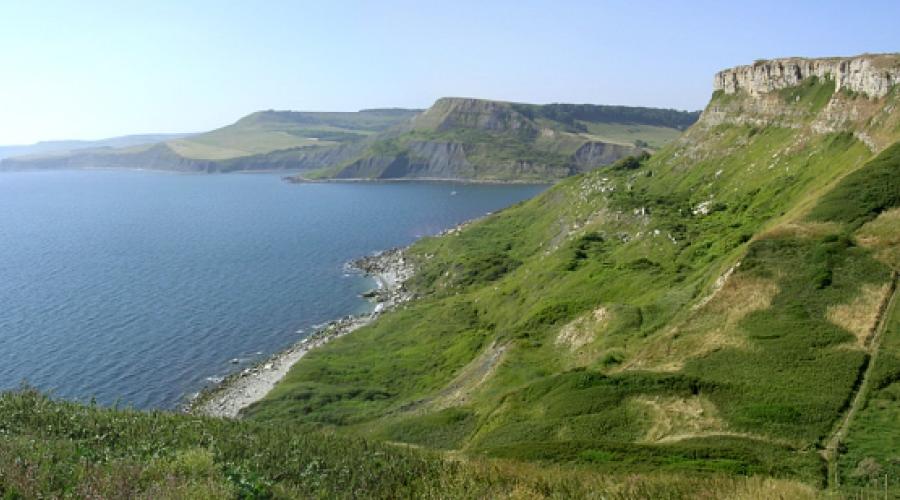
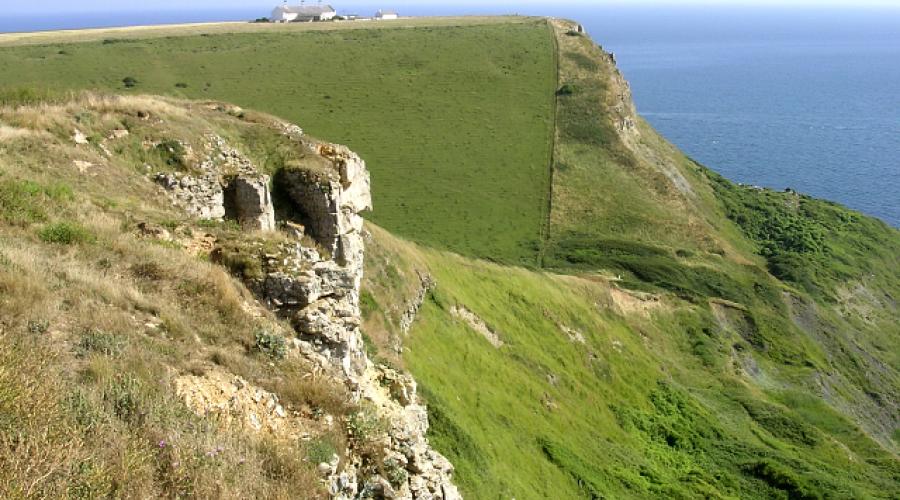
St Aldhelm’s Head: A dramatic limestone headland famous for sheer coastal cliffs, seabirds, and St Aldhelm’s Chapel, a square stone vaulted building from the C12, thought to have served as a beacon or place of pilgrimage, with sweeping sea views.
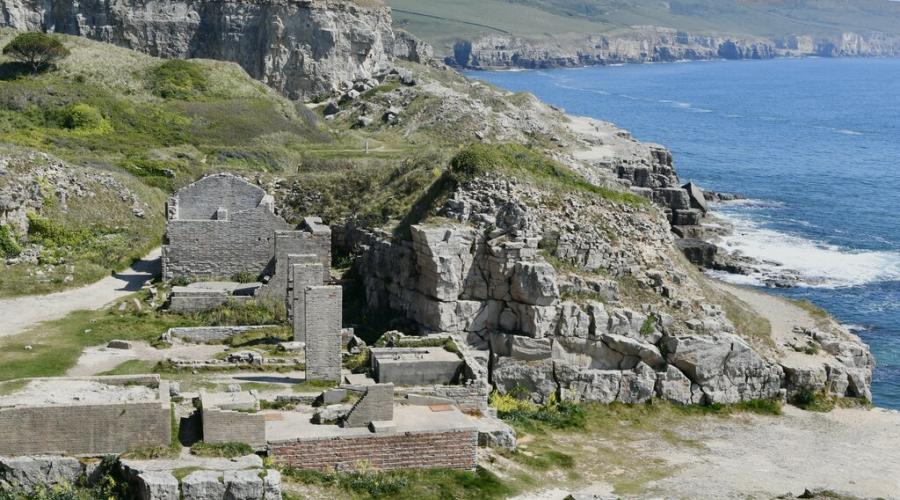
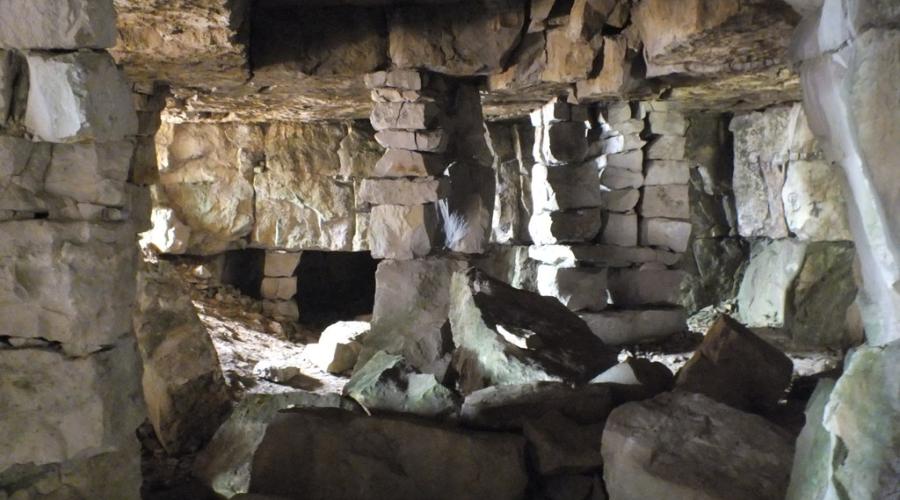
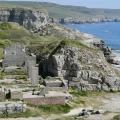
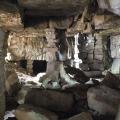
Winspit Quarries: An abandoned limestone quarry complex, worked from the early C18 to the late C20. The quarries are cut directly into the cliffs, with galleries and tunnels opening onto the sea. Winspit is also culturally notable as a filming location for classic science fiction, including Doctor Who (as Skaro in 'Destiny of the Daleks' from 1979), Blake’s 7 (as Mecron 2 in 'Games' from 1981) and more recently the series Star Wars: Andor, giving it an enduring cult reputation.
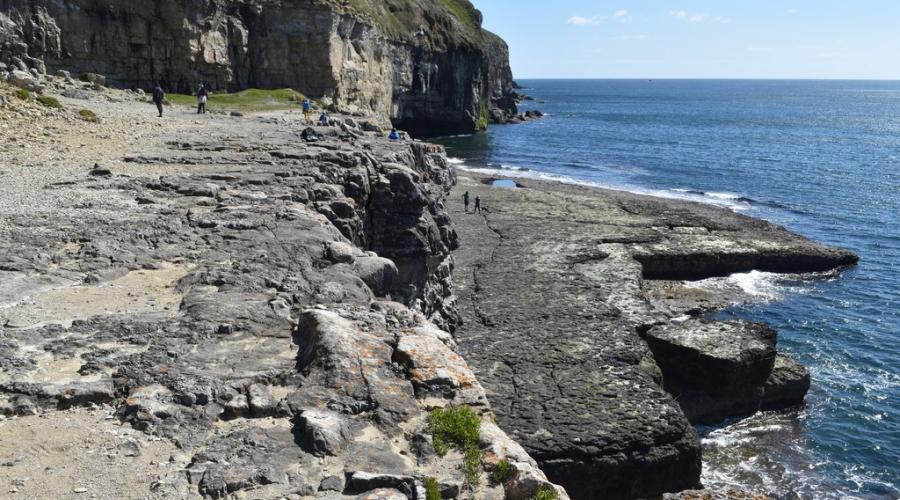
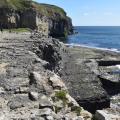
Dancing Ledge: A broad wave-cut platform at the foot of the cliffs near Langton Matravers, created by a combination of natural erosion and quarrying. Quarrymen once loaded stone directly onto boats from the ledge, and cut pools remain as evidence. The name may refer to the movement of waves across the flat rock.
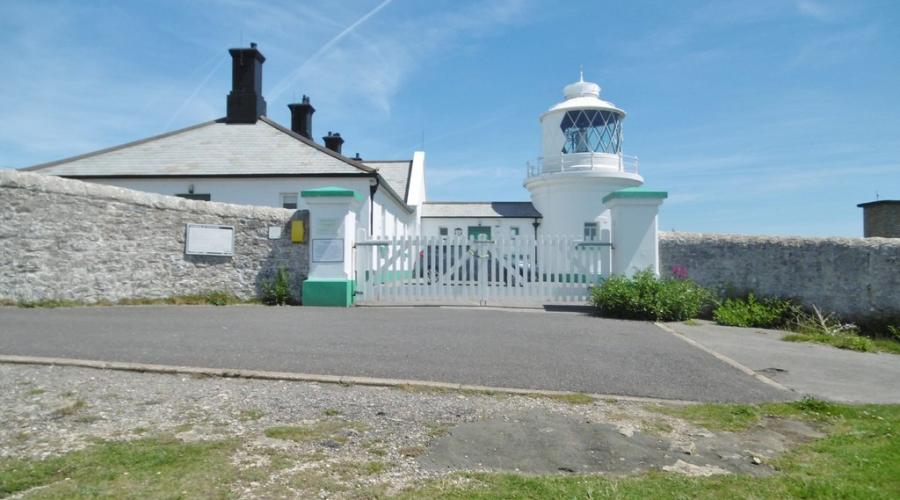
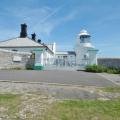
Tilly Whim Caves: A group of former limestone quarries cut into the cliffs at Durlston, worked mainly in the C18 and C19. The caves supplied building stone for local use and were later opened as a Victorian tourist attraction. Quarrying ceased and the caves were closed in the 1970s due to rockfall risk. Although inaccessible, they remain an important wildlife site, supporting bats and seabirds, and illustrate the industrial exploitation of Purbeck geology. Anvil Point Lighthouse is from 1881 and is fully automatic.
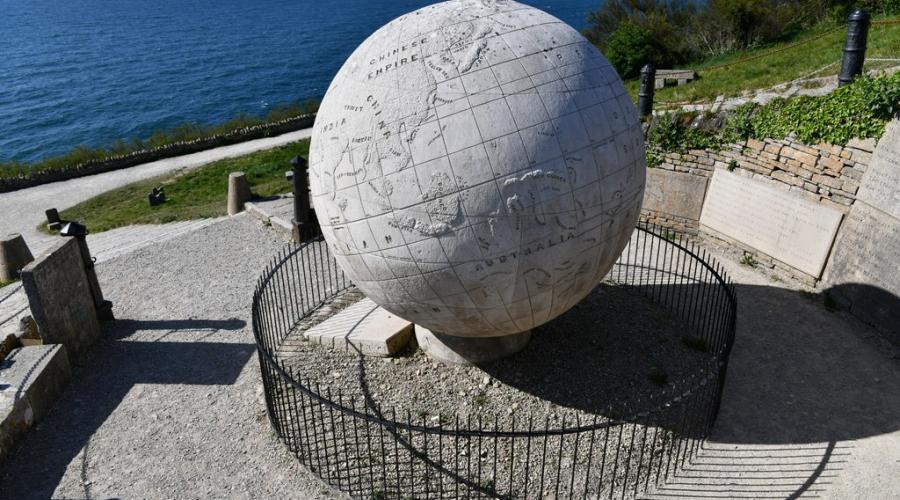
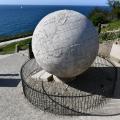
Durlston Head: A prominent limestone headland south of Swanage. The cliffs expose a sequence of Purbeck and Portland limestones that record changing environments from lagoons to shallow seas. The area bears clear evidence of historic quarrying, alongside later maritime and industrial features such as coastal defences and navigation aids. Now managed as Durlston Country Park, the headland is valued for its geology, biodiversity and panoramic coastal views. A notable landmark is the Great Globe, built in 1887 by George Burt: a massive stone sphere over 3 metres in diameter, carved with a detailed map of the world and astonishingly accurate astronomical data, and mounted on a Purbeck stone plinth, celebrating Victorian science and craftsmanship.
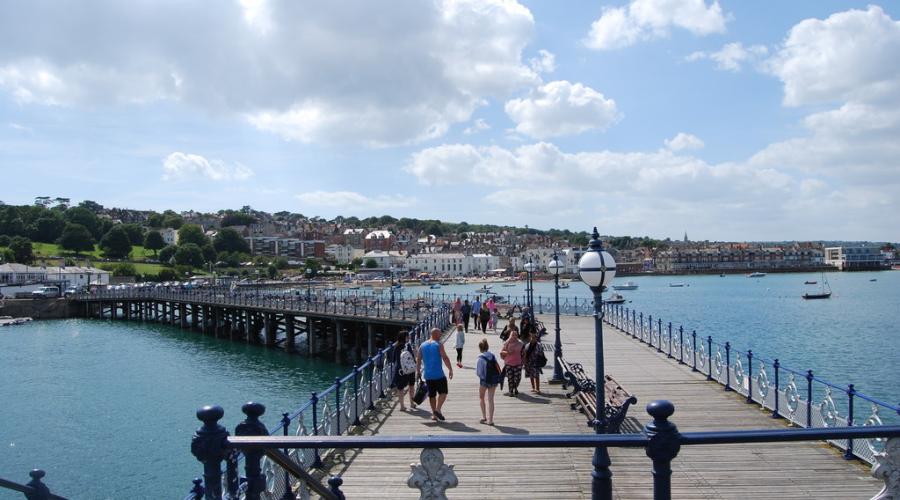
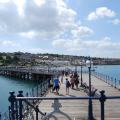
Swanage: A coastal town on the eastern edge of the Isle of Purbeck, nestled between bays of limestone and chalk. Its development was shaped by nearby stone quarries and later by Victorian tourism, transforming it into a seaside resort. The town retains strong maritime and cultural traditions, centred on its pier, heritage railway and annual festivals. Swanage also serves as a gateway to the Jurassic Coast, with close connections to fossil hunting, coastal walking and the wider geological heritage of Purbeck.
The route (please click here to check the route on the Ordnance Survey website and see elevations and ascents):
Heading south out of Corfe Castle, along West Street, we'll reach Corfe Common and use the Hardy Way to get to Kingston. We'll walk along South Street and reach the Purbeck Way which will link up with the South West Coast Path, which will take us all the way to Swanage.
Accommodation:
- Campsites: Choose one near Corfe Castle. Browse here. Woodyhyde is always popular with ODLers doing the Dorset Double, and you'll have lots of company. Otherwise try Norden Campsite (click the links).
- Bed and Breakfasts: Nice B&Bs are abundant a short bus ride away in Swanage, but are booking up fast. Browse here (click the link).
- Book from Friday 1 May to Monday 4 May if planning on doing both walks and staying down.
The OutdoorLads Foundation:
If the cost of travelling and staying over is daunting, do consider using the OutdoorLads Foundation. This enables paying members to receive up to £200 in total a year towards any expense they incur participating in an OutdoorLads event. Just apply simply and confidentially here, at least two weeks before the event.
Dogs:
I love having dogs on my walks and this one may be suitable for dogs with lots of stamina. It is long, has some fields with livestock and will partly be along lanes. Much of the route is exposed to the sun so a dog may overheat, although they will be able to go in the sea at Dancing Ledge. Your dog must be responsive if it is off the lead.
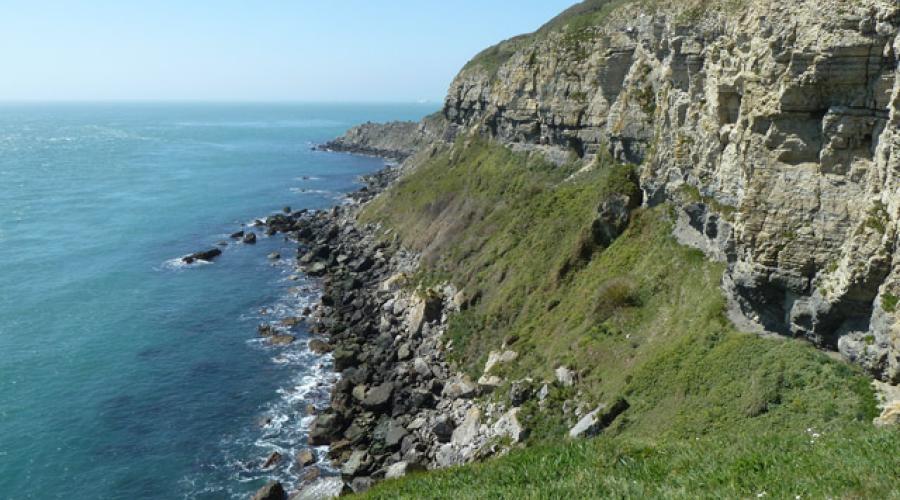
(Images: Durlston Bay: Photo © Chris Andrews (cc-by-sa/2.0);View North from the Cliffs at St Aldhelm's Head: Photo © Jim Champion (cc-by-sa/2.0); West Street, Corfe Castle: Photo © Pierre Terre (cc-by-sa/2.0). View from Emmetts Hill to the coastguard cottages on St Aldhelm's Head, Isle of Purbeck: Photo © Jim Champion (cc-by-sa/2.0); Cliff east of St. Aldhelm's Head: Photo © Robin Webster (cc-by-sa/2.0); Worth Matravers: The disused Winspit Quarry and derelict buildings from above: Photo © Michael Garlick (cc-by-sa/2.0); Winspit Quarry caves: Photo © Ian Andrews (cc-by-sa/2.0); Dancing Ledge: Photo © David Martin (cc-by-sa/2.0); Durlston, lighthouse: Photo © Mike Faherty (cc-by-sa/2.0); Swanage, Durlston Head: The Great Globe: Photo © Michael Garlick (cc-by-sa/2.0); Swanage Pier (2): Photo © Barry Shimmon (cc-by-sa/2.0). These images are copyrighted but are here credited to their copyright holders and are licensed for reuse under Creative Commons CC-BY-SA/2.0.)


What to bring
Well-fitting walking boots are absolutely essential to cope with the uneven, rocky and steep terrain.
You may need suncream and perhaps a sunhat if sunshine is forecast as the route is frequently exposed and only offers sporadic shade. Bring a waterproof coat if wet weather is forecast.
Food & drink
Bring a packed lunch and plenty to drink. You can get filled rolls at The Village Bakery in Corfe Castle which we'll walk past.
You must have at least two litres of fluid with you if the weather is warm. The only places to get drinks and other refreshments will possibly be at Chapman's Pool at about 12.00 and in Swanage at the end.